


Best Ringo Starr songs of all time. His greatest hits, post-Beatles
Best Ringo Starr songs of all time. His greatest hits, post-Beatles

Ed Masley, Arizona RepublicTue, July 7, 2026 at 12:01 PM UTC
0
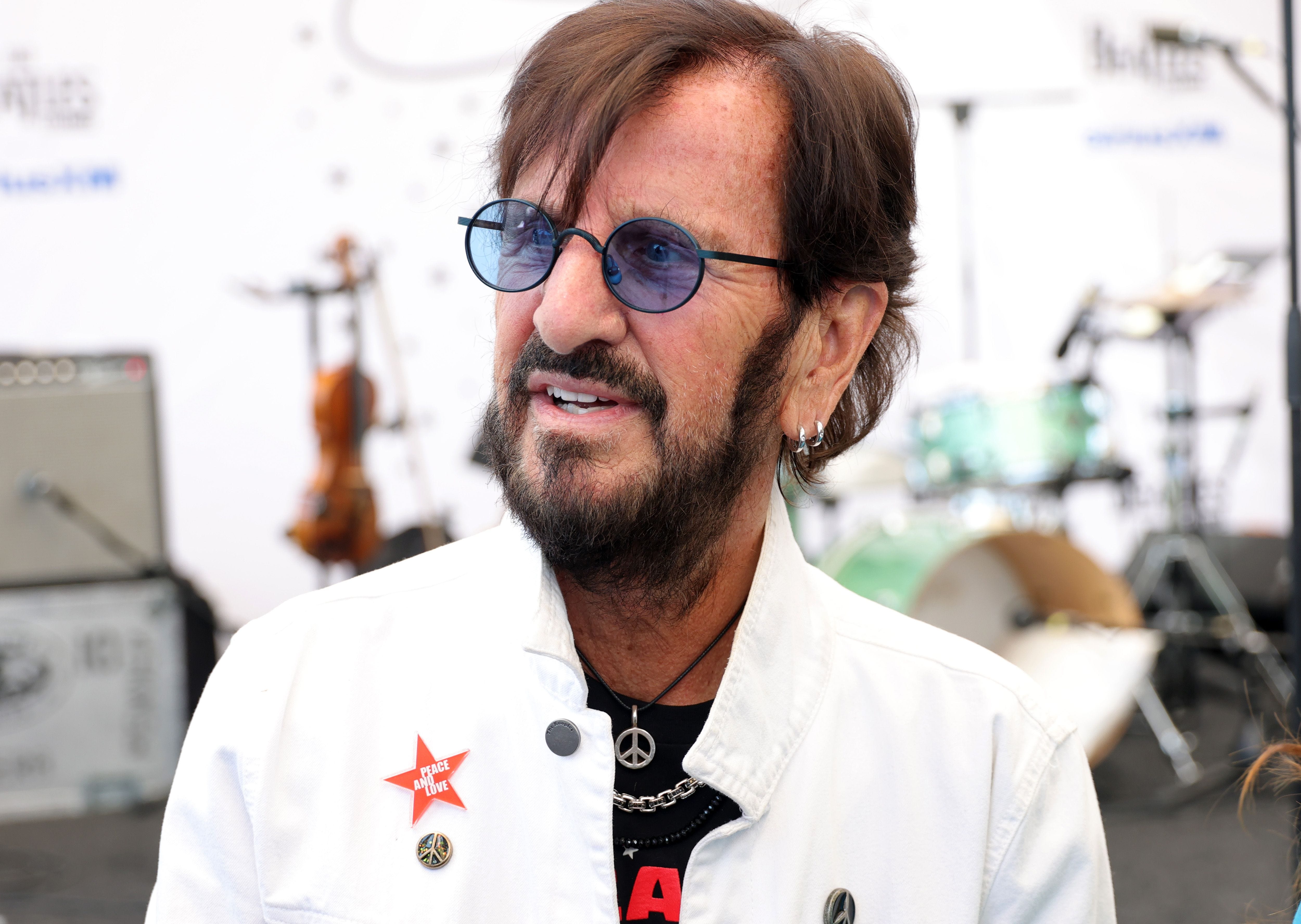
His most enduring contribution to the history of rock ’n’ roll will always be the magic he brought to The Beatles’ most transcendent triumphs with his criminally underrated drumming.
But Ringo Starr made the most of his moments in the vocal spotlight in his Beatles days, from “Boys,” the Shirelles song he sang on “Please Please Me,” their first album, to “Yellow Submarine,” “With a Little Help From My Friends” and his two brilliant contributions to the canon as a songwriter, “Don’t Pass Me By” and “Octopus’ Garden.”
Still, it’s doubtful many casual observers figured Ringo Starr for someone who could manage a sustainable career outside The Beatles as a vocalist. At least until he started running singles up the pop charts in the early '70s. By 1981, when “Wrack My Brain” hit No. 38 on Billboard’s Hot 100, he’d gone Top 40 no fewer than 10 times in the States, including two chart-topping singles, “Photograph” and “You’re Sixteen.”
At 86, he’s still releasing new material. His 22nd album, “Long Long Road,” arrived in April 2026 and he’s still touring with the latest version of his All-Starr Band.
To celebrate his legacy, here's one fan's unapologetically subjective countdown of his best post-Beatles work.
30. ‘Walk With You’ (2009)
It may not be a true duet like “Home to Us” on Paul McCartney’s latest album, but the former Beatles definitely share the vocal spotlight on this string-laden ballad from Ringo’s “Y Not” album, where McCartney’s soaring vocal dominates the chorus hook.
Written by Ringo and Van Dyke Parks, the track is sweetly sentimental, a love song whose lyrics apply as easily to friendship as they do to a more intimate relationship.
It’s only so much of a stretch, then, to imagine that we’re meant to hear this as the former bandmates singing to each other, from the chorus, where they both sing “When I walk with you, when I talk with you, everything will be fine,” to the bridge, where Ringo sings, “Love is the answer, and it is real/ I'll always be there beside you.”
This newsletter goes to 11. Sign up forweekly music news.
29. “Oo-Wee” (1974)
Written by Ringo and Vini Poncia, the team responsible for “Oh My My,” this track could almost be mistaken for a cover of some great lost R&B gem from New Orleans, from the swagger of the drumming to the bayou-style piano courtesy of Dr. John, whose solo is fantastic.
There’s a rousing horn chart answering the chorus hook and gospel-flavored backup vocals, with Ringo out front oozing personality on vocals. And the lyrics are almost as fun as the music. Take the second verse, where Ringo sings, "She looks just like the new Jean Harlow with sultry lips and long blonde hair/ They say she came from Hades/ Or was it the Euphrates that brought my lady here?”
28. ‘You Don’t Know Me at All’ (1976)
A European-only single from the “Ringo’s Rotogravure” album, this one feels like it could easily have topped the Easy Listening charts here in the States. Arif Mardin’s production is almost impossibly smooth and the way the drummer navigates that melody is soft-rock gold, complete with sweetened backing vocals sighing “Shooby-doo-dum-dum.”
Country singer Mickey Guyton covered this in 2025 after joining Ringo on the song at Nashville’s Ryman Theatre for the taping of a TV special called “Ringo & Friends at the Ryman,” but it seems the breezy charm of the original was lost on Guyton, who manages to render it bombastic and emotionally overwrought, more like something you’d hear on “American Idol.”
27. ‘Liverpool 8’ (2007)
Co-written with Dave Stewart of Eurythmics, the title track to Ringo’s 15th solo album is a bittersweet reflection on the drummer leaving Liverpool to chase his fame and fortune elsewhere.
“Destiny was calling, I just couldn't stick around,” the star apologizes in the chorus, backed by strings that clearly used George Martin as a point of reference, before ending on a more triumphant note with “Liverpool, I left you, but I never let you down.”
Ringo takes the listener on a journey from his early work experience (“I was a sailor first, I sailed the sea/ Then I got a job in a factory”) to playing Butlin’s Camp, a chain of seaside resorts, with Rory Storm and the Hurricanes before joining the Beatles.
“Went to Hamburg, the red lights were on, with George and Paul and my friend John,” he sings. “We rocked all night, we all looked tough/ We didn't have much, but we had enough.” This kind of thing is catnip for a Beatles fan, and I say this based on personal experience.
26. ‘Never Without You’ (2003)
George Harrison died on Nov. 29, 2001. At some point the following year, the drummer wrote this heartfelt tribute to his friend and fellow former Fab with Gary Nicholson and Mark Hudson for the “Ringo Rama” album, which sounds remarkably like something Harrison and Ringo would’ve done together in the ‘70s. It also features Eric Clapton playing lead guitar part in his friend’s honor.
The opening verse finds Ringo reminiscing on the early days of Beatlemania. "We were young, it was fun and we couldn't lose," he sings. "Times were right/ Overnight, we were headline news” Before the song is through, he’s worked in references to a number of Harrison songs (“Within You Without You,” “Here Comes the Sun,” “All Things Must Pass” and “I Dig Love”).
There’s even a reference to Paul McCartney’s tribute to John Lennon, “Here Today,” which may have been a holdover from Ringo’s original idea — a song paying tribute to Harrison, Lennon and Harry Nilsson.
25. ‘Loser’s Lounge’ (1970)
The fact that Ringo’s voice is well-equipped for country music has been obvious since 1965, the year he took the vocal spotlight on the Beatles’ cover of Buck Owens and the Buckaroos’ “Act Naturally.” And he’d proven he could write a country song a few years later with the masterful “Don’t Pass Me By.”
It’s only natural, then, that he might find his way to Nashville when the Beatles went their separate ways to see if he might have a proper country album in him after all. “Loser’s Lounge” is one of 12 songs included on “Beaucoups of Blues,” his second solo album, produced by pedal steel guitarist Pete Drake, who enlisted Nashville session greats to back the Beatle on his country holiday.
This song plays to Ringo’s strengths as an interpreter, his sad-sack vocal effortlessly transporting the listener to a barstool right there next to our boy Ringo at the Loser’s Lounge.
24. ‘La De Da’ (1998)
Ringo never could resist a rousing singalong. For “La De Da,” he rounded up a rowdy choir of more than 40 friends and family members, from Barbara Bach Starkey (his wife) to Steven Tyler, Timothy B. Schmit, Nils Lofgren of the E Street Band and Van Dyke Parks.
To their credit, they manage to sound like a bar full of soccer fans raising a pint after cheering their team to victory on the big screen. Which is clearly the vibe he was chasing here. And just for kicks, they throw some vocals through a vocoder, arriving at a sound that would’ve fit right in on half a dozen or so of Electric Light Orchestra's best albums.
This is all in service to an endearingly Ringo-esque message of letting the little things go. “When I get blue, here's what I do and so can you,” Ringo sings on his way to a chorus of ‘La la de da, like qué será, será/ Whatever, la de da.”
And just when you’re thinking “Well, this couldn’t get any cuter,” the band holds a chord for dramatic effect at the end of “Just like Doris Day said,” letting Ringo bring the song back in with a boozy “qué será” accompanied by a slide player slowly ascending the neck of his guitar. I’m assuming that's the handiwork of Joe Walsh, one of three guitarists credited. McCartney also guests on bass and vocals.
23. ‘Golden Blunders’ (1992)
This withering portrait of a married couple who may have had no business getting married in the first place is the work of Seattle-based power pop legends the Posies, whose mastery of Beatles-esque popcraft is on full display here. Had this been a Beatles song, one would imagine the cynical lyrics were written by Lennon while the upbeat nature of the chorus hook suggests McCartney.
Ringo’s wounded vocal underscores the pathos of the lyrics here, leaning into the misery of “Disappointment breeds contempt/ It makes you feel inept/ Never thought you'd feel alone at home.”
Peter Asher of Peter and Gordon fame produced the track, enlisting two musicians who appeared on countless classic records he produced for Linda Ronstadt — Andrew Gold on backing vocals and guitar, and Waddy Wachtel, who contributes a beautifully constructed lead-guitar break.
And when the spotlight shifts to Ringo’s drumming as they head into the final verse, he comes through with a signature “Ticket to Ride”-style beat.
22. ‘After All These Years’ (1992)
Like "Golden Blunders," this upbeat rocker is from “Time Takes Time,” a 1992 release that stands as one of Ringo’s strongest albums. Written by Ringo and Johnny Warman, this track was produced by Jeff Lynne, who also contributes guitar, bass, piano, keyboards and backing vocals, which although he didn’t write the song, can’t help but give it a healthy Electric Light Orchestra vibe (without the orchestra).
The guitars are a contagious sugar rush, like T. Rex on a caffeine high with some serious echoes of Chuck Berry on the solo, and the chorus hook is a spirited celebration of a time “when every boy and girl was rocking all over the world.”
But there’s also a bittersweet undercurrent to the melody, the mood and lyrics on those verses, with their references to “stepping out of loneliness” and “But I never meant to really hurt you.”
21. ‘Six O’Clock’ (1973)
Paul and Linda McCartney co-wrote this Beatles-esque highlight of the “Ringo” album, a bittersweet pop confection that feels like an outtake from “Magical Mystery Tour” or “The Beatles.” And it would’ve held its own on either album.
The fact that he contributed a song to “Ringo” (at Ringo’s request) had to feel like a bit of an olive branch on McCartney’s part, given the tensions that had plagued their friendship since the breakup and subsequent lawsuit.
Is it possible to read a little too much into the idea that he chose to deliver an olive branch whose chorus hook is “I don’t treat you like I should”? That’s hard to say. But I know I hope Ringo took it that way.
Paul and Linda appear on the recording (done in London to ensure McCartney’s presence on the album, which features all four Beatles), with Paul’s piano as the driving force. McCartney also fleshed things out with “shades of ‘Maxwell’s Silver Hammer’” synthesizer and tasteful flute and string arrangements.
20. ‘Harry’s Song’ (2008)
An old-timey highlight of “Liverpool 8,” the drummer’s 15th solo album, “Harry’s Song” finds Ringo honoring the memory of his dear friend Harry Nilsson, who'd became one of his closest drinking buddies by the early ‘70s, when Ringo, John Lennon and Nilsson were partying hard with Alice Cooper and other celebrity friends in the bars of Los Angeles.
Co-written by Ringo, Mark Hudson, Gary Burr and Steve Dudas, it’s more a musical tribute than lyrical tribute, mentioning Nilsson by name only once.
The second verse is “Harry was a friend most true/ He sang songs like this for me and you/ Whenever I'm here without you, we’re still together.” It’s a sweet thought. And Nilsson did sing songs like this, especially at the point in his career when he was getting drunk with Ringo. There’s even a whistling solo.
19. ‘Early 1970’ (1971)
Ringo’s solo years are positively overflowing with reflections on his life in music, starting with this country-flavored flipside to his breakthrough hit “It Don’t Come Easy.” It wasn’t easy being Ringo Starr in early 1970, the Beatles having gone their separate ways.
In February of that year, the drummer told Look magazine, "I keep looking around and thinking where are they? What are they doing? When will they come back and talk to me?" This is where he puts those feelings into music, with each bandmate rating a verse and George Harrison supplying slide guitar licks in his own inimitable fashion.
The final verse finds Ringo goofing on his own abilities on instruments his former bandmates play so well (“I play guitar, A-D-E / I don’t play bass ‘cause that’s too hard for me”) before concluding with a wistful “When I go to town, I want to see all three.”
18. 'Lipstick Traces (On a Cigarette)' (1978)
The first single from “Bad Boy,” Ringo’s seventh solo album, finds him lending his signature style to a New Orleans R&B masterstroke written by Allen Toussaint (under the pseudonym Naomi Neville) and first released in 1962 by Benny Spellman.
You can still hear the New Orleans in the mix, for which a large part of the credit goes to Dr. John, whose guest piano sounds like it was laid to tape between a Po-Boy and a big old bowl of Jambalaya.
It’s the perfect vehicle for Ringo, who taps into the heartbreak of the lyrics from the time he makes his entrance with a world-weary sigh of “Your pretty brown eyes/ Your wavy hair/ I won’t go home no more ‘cause you’re not there.” It didn’t chart, but Ringo’s solo years were in a lull by then. It would’ve been a big hit in the days of “Back Off Boogaloo.” I guar-on-tee!
17. ‘Rory and the Hurricanes’ (2015)
The Beatles only rate a passing reference in this sentimental journey through the early history of Liverpool’s most famous gift to drumming. When Ringo met the Beatles, he was drumming for another of his hometown’s finest exports to the clubs of Hamburg, Germany — Rory Storm and the Hurricanes. That’s how the Beatles came to know him as a force of nature on that kit.
And where his songs about the Fabs can seem a bit more boastful than intended — and how could they not? — the fact that the Hurricanes never went on to inspire a wave of unhinged adulation now known as Hurricane-mania only adds to the charm of his wistful reflections in this loving tribute to his other former bandmates, co-written by Ringo and Dave Stewart of Eurythmics.
As he sings in the opening verse, "We were sleeping on the floor, living on bread and jam/ Because we thought we'd hit the big time; we didn't give a damn.”
16. ‘Wrack My Brain’ (1981)
Released as the lead single from the “Stop and Smell the Roses” album, this proved to be the drummer’s last Top 40 entry on the Billboard Hot 100, where it peaked at No. 38. The track was written and produced by Harrison, a frequent Starr collaborator, who was feeling disillusioned with the music industry (“There’s no way I can see coming up with something you’d enjoy as much as TV”).
It’s not as downbeat as those lyrics would suggest, thanks in large part to Ringo’s delivery but also the upbeat arrangement, from Herbie Flowers’ McCartney-esque disco bass to the delightfully jokey ending — a vocoder-ized robot voice following one last soulful “Wrack my brain” with “Ringo’s brain.” It sounds like something Jeff Lynne would’ve done.
15. ‘Only You (And You Alone)’ (1974)
One of Ringo’s most inspired covers, this soulful ballad peaked at No. 6 on Billboard’s Hot 100 and topped the Easy Listening charts. John Lennon suggested he attempt this doo-wop classic first recorded by the Platters, whose 1955 recording topped the R&B charts, for “Goodnight Vienna.”
Advertisement
It features harmonies by Nilsson, acoustic guitar by Lennon (whose guide vocal was subtly tucked into the mix) and a wonderful spoken-word monologue by Starr, whose lead vocal is suitably tender. In the liner notes to “Photograph — The Very Best of Ringo Starr,” the drummer writes, ‘My voice is good because it was too high for me so I went into this strange falsetto. And it was like, ‘Wow, it works!’”
14. ‘(It’s All Down To) Goodnight Vienna’ (1974)
John Lennon came up with the opening track for which “Goodnight Vienna” was named in the midst of an infamous drinking binge often referred to as Lennon’s Lost Weekend.
And you can definitely feel the impact of those nights spent chugging Brandy Alexanders in the contagiously boozy appeal of the music itself and those lyrical references to feeling like a “bohunk” in one verse and an Arab “dancing through Zion” in another (clearly not his most enlightened hour as a lyricist).
Lennon counts things off and shouts “All right” at the top of the track, which also features the songwriter leading the charge on piano and rocks with a reckless abandon rarely heard on Ringo Starr recordings. Blessed with one of Ringo’s most infectious vocals, especially those "uh-huh-huhs," it peaked at No. 31 on Billboard’s Hot 100.
13. ‘Have You Seen My Baby?’ (1973)
Written by Randy Newman and originally recorded by Fats Domino in 1969, the second track on “Ringo” features Marc Bolan of T. Rex, whose presence is so obvious in that guitar groove, there’s no need to check the credits. The echoes of “Bony Moronie” in Tom Scott’s horn arrangement combine with James Booker’s authentic New Orleans piano to complete the old-school R&B/rock ‘n’ roll vibe.
And Ringo makes the most of Newman’s lyrics as the hopelessly devoted cuckold with his casual delivery of “I seen her with the milkman, riding down the street/ When you're through with my baby, milkman, send her home to me.” This was the first song recorded for “Ringo” and it set a high standard for what was to follow in those sessions.
12. ‘Weight of the World’ (1992)
There’s more than a hint of the Byrds in the chiming guitars on this folk-rock revival of the early ‘90s, with Jellyfish members Andy Sturmer and Roger Joseph Manning completing the mood on harmonies. It also features Benmont Tench providing subtle keyboard touches.
With Don Was producing, it manages to sound more like a power-pop recording of the early ‘90s echoing the folk-rock ‘60s than the work of someone whose band did so much to define the music of that era just getting in touch with his roots. But not in a bad way.
In an interview with Rolling Stone, the drummer said he had concerns that they were getting to close to his old band’s territory. “But then Don said: ‘Look, all the people I produce want to sound like that. And you were there.’ And I was. So that really cooled me out.”
11. ‘No-No Song’ (1974)
It’s a bit of a novelty song, innit? But there’s no shame in novelty when you approach it with the charismatic zeal that Ringo brings to this ridiculous recording, which I love with all my heart. The sheer enthusiasm of that sniffing noise when Ringo tells the woman with the 10-pound bag of cocaine “No no no no, I don’t (sniffing noise) no more” is priceless.
Ringo’s drinking buddies Nilsson and Keith Moon dropped by the studio to lend a hand. That’s Nilsson on harmonies and Moon on comic ad libs, shouting a suitably boozy “and he wasn’t joking” in response to Ringo telling of a man from Nashville who said his moonshine whiskey was the best in all the land.
The second single from “Goodnight Vienna,” written by Hoyt Axton and David Jackson, it peaked at No. 3 on Billboard’s Hot 100, going all the way to No. 1 on Cash Box.
10. ‘You’re Sixteen’ (1973)
I know we’re not supposed to like this song in 2026 because the man was in his early 30s when he cut this cover of a song that peaked at U.K. No. 3 in 1961, a year before he joined the Beatles — a nostalgic exercise requiring the narrator to play a character who’s crushing on a 16-year-old girl.
Having recently entered my teens when I discovered Ringo’s version (a few years down the road from it charming its way to No. 1 on Billboard’s Hot 100), it never once occurred to me that Old Man Ringo was creeping on kids.
But this was the ‘70s, when a 30-year-old Bowzer had a hit TV show singing songs of teen romance with Sha Na Na and a 29-year-old Olivia Newton-John could play a high school girl in “Grease” and no one seemed to mind.
When “You’re Sixteen” was first recorded (by Johnny Burnette of the fabulous Rock and Roll Trio), rock ‘n’ roll was being marketed aggressively to teenagers. Hence, all the references to teens in countless classic hits recorded by performers clearly old enough to drink. It wasn’t rampant pedophilia so much as savvy marketing. Songs are often sung in character. We used to understand that.
I have no idea how old Ringo’s character in “You’re Sixteen” is, but I always just assumed the narrator was also just a kid. As for the song? It’s cute. And Ringo plays it to the hilt, with doo-wop backing vocals courtesy of Nilsson, authentic R&B piano courtesy of Nicky Hopkins and Paul McCartney commanding the spotlight on what sounds like a kazoo when actually it's just McCartney mouthing a solo.
These guys sound like they’re having a loopy good time, and it’s beyond contagious.
9. ‘Pure Gold’ (1976)
A highlight of the “Ringo’s Rotogravure” album, “Pure Gold” only sounds like yet another remake of a classic oldie. Paul McCartney wrote this tender sock-hop ballad, which speaks directly to his effortless melodic sensibilities
It doesn’t hurt that Arif Mardin, the record’s producer, arranged the sessions for Aretha Franklin's seminal “I Never Loved a Man the Way I Love You” and the strings on Dusty Springfield’s finest work, “Dusty in Memphis.” Which is to say he clearly knew exactly how to make this kind of magic happen. The result is timeless on arrival.
What he’s polished here was “Pure Gold” to begin with, though. It also features both McCartneys — Paul and Linda — on vocals. Ringo talked them into it over dinner and drinks and tried to join in when they got back to studio but Mardin staged an intervention.
As Ringo told Creem at the time, “The three of us were out there, and I was a bit tipsy, as they say, so I’m shouting along with them, and Arif’s saying, ‘We’ve got you, you know, we’ve got your vocal down, so back off.’ So, we let the stars take over.”
8. ‘Time on My Hands’ (2025)
This was our first taste of Ringo’s return to country music, 2025’s “Look Up.” And it may be his strongest country vocal yet. It helps that it’s a great song, written and produced by T Bone Burnett, the kind of guy who wins Grammys for this kind of music.
"Time on My Hands” is a breakup song and Ringo navigates the narrative with style, his delivery noticeably brighter on the final verse, where after pining for the one who got away on the earlier verses, he’s resolved himself to moving on.
"So, if you're feeling lonely, well, I've been lonely, too,” he sings. “And you’ll need a one and only who'll be good to you/ A heart that's good and steady, someone who understands/ Well, these two arms are empty and I've got time on my hands.”
It's classic country storytelling. And when Ringo’s backbeat kicks in? It’s a breathtaking reminder of how much his drumming added to the magic of those Beatles records.
7. ‘Easy For Me’ (1974)
This song could only be the handiwork of Harry Nilsson, whose affinity for the Great American Songbook is put to brilliant use here on a bittersweet piano ballad with richly textured orchestration, including harp. Ringo’s always been a natural at this sort of ballad — a point made abundantly clear on his album-closing performance of John Lennon's “Good Night” on 1968's “The Beatles.”
And Nilsson has certainly given him something to work with on the lyric front. “Sandcastles fell from the tears in our eyes?!” That’s genius. Nilsson included a retitled “Easier For Me” on his next album, “Duit on Mon Dei,” but Ringo’s rendition remains the definitive version. The strings on Nilsson’s version feel more like they should be scoring something really bad about to happen in an Alfred Hitchcock movie.
6. ‘A Dose of Rock ‘n’ Roll’ (1976)
The lead single and opening song to “Ringo’s Rotogravure” is, as advertised, a dose of rock ‘n’ roll — specifically, the rock ‘n’ roll of Ringo’s youth, complete with horns and doo-wop backing vocals punctuating Ringo’s words with an irrepressible “Shoo-bop shoo-wow-wow.”
He even throws in a snatch of the chorus to “Hey! Baby!,” the 1961 Bruce Channel hit that inspired John Lennon’s harmonica work on the Beatles’ “Love Me Do” and “Please Please Me.” The album’s second single was, in fact, “Hey! Baby!,” so that song was clearly on his mind at that point for some reason.
“A Dose of Rock ‘n’ Roll” is better than his version of "Hey! Baby!," though, and the charts agreed. “A Dose of Rock ‘n’ Roll” hit No. 26 on Billboard’s Hot 100.
That fake-out intro, suggesting a rowdier track before settling into a swaggering old-school R&B vibe, is a nice touch. And that old-school R&B vibe definitely suits the lyrics, with a chorus hook of “If your mama don't feel good/ Or your daddy don't feel good/ Take a dose of rock 'n' roll/ And wash it down with cool, clear soul.”
5. ‘Back Off Boogaloo’ (1972)
You can definitely hear the influence of Ringo’s pal Marc Bolan in the trance-inducing, T. Rex-centric glam-rock swagger of his second solo hit to crack the Top 10 on the Billboard Hot 100, where it peaked at No. 9. The song fared even better on the U.K. charts, where glam was all the rage, becoming Ringo’s highest-charting U.K. solo hit.
The road to writing “Back Off Boogaloo” began with Ringo having Bolan over to his house for dinner, where the glitter-rocker’s frequent use of the word boogaloo clearly made an impression. Deciding to write a song with that word in the title, it’s only fitting that he leaned into a Bolan vibe with a trio of female backup singers adding to its many charms.
Although not credited as such until 2017, George Harrison helped him whip the writing into shape. He also went on to produce the record, which features his signature slide-guitar, albeit a more stinging variation on that signature than “My Sweet Lord.”
The single, which finds the former Beatle going full Ringo on drum fills, was released a day before the T. Rex concert featured in the “Born to Boogie” documentary, which Ringo not only produced but directed. That’s how deeply he was into T. Rex at the time.
It’s been suggested that the lyrics are a dig at Paul McCartney, especially the bridge, where he sings “Get yourself together now and give me somethin' tasty/ Everything you try to do, you know it sure sounds wasted." But I don’t hear it and and Ringo has denied it, so I’ll take him at his word here.
4. ‘Oh My My’ (1973)
He tosses off a reference to “Born to Boogie” on the outro to this effervescent highlight of the “Ringo” album, in which the singer pays a visit to his doctor, who prescribes the only reasonable cure for what’s ailing him. “Oh my my, oh my my,” the doctor tells him. “Can you boogie? Can you slide? Oh my my, oh my my. You can boogie if you try.”
Billy Preston gets the party started, pounding out a raucous variation on the chorus hook at the piano before bringing in the organ, Tom Scott answering that organ with a sax riff. This is all before the vocals kick in.
By the time they hit the second chorus, Martha Reeves of the Vandellas and Merry Clayton of “Gimme Shelter” fame have joined the party, adding that essential “Can you boogie?” hook to the repeated chorus on the fadeout, where the track is clearly getting more exciting as it fades.
Is it all a bit silly? Yes, of course it is. But that’s what makes it such a joyous “boogie-woogie remedy.” And as Ringo’s doctor tells him, “It’s guaranteed to keep you alive.” This one peaked at No. 5 on Billboard’s Hot 100 and inspired an Ike & Tina Turner cover on “Soul Train,” to which the only sane response is “oh my my.”
3. ‘I’m the Greatest’ (1973)
John Lennon started writing “I’m the Greatest” as a wry reflection on his storied past in the final days of 1970, a tumultuous year for former Beatles, having tuned into the maiden U.K. television broadcast of “A Hard Day’s Night,” a classic Richard Lester comedy released in 1964 that captures Beatlemania in all its unhinged glory.
It’s a brilliant song that works much better as a vehicle for Ringo, whose delivery (combined with the fact that it’s Ringo) serves to underscore the self-effacing humor in the lyrics, whose title line was on loan from Muhammad Ali, in a way that may not have been nearly as apparent if Lennon had chosen to sing it himself.
Before handing it off, he inserted a couple references to Ringo in the lyrics on the bridge, which also features “Sgt. Pepper” crowd noise (“Yes, my name is Billy Shears/ You know it has been for so many years/ Now I'm only 32 and all I wanna do is boogaloo”). Ringo more than rises to the challenge, shouting “I’m the greatest and you better believe it baby” as the piped-in crowd goes wild.
In addition to Lennon on piano and backing vocals, “I’m the Greatest” features Harrison on lead guitar (and “Fifth Beatle” Billy Preston on organ and electric piano), making this the closest The Beatles ever came to reuniting while they had a chance. As Lennon told Melody Maker at the time, “The three of us were there and Paul would most probably have joined in if he was around, but he wasn’t.”
2. ‘It Don’t Come Easy’ (1971)
Ringo’s first hit single peaked at No. 4 on both sides of the Atlantic, an auspicious kickoff to his solo years. Although uncredited, George Harrison helped Ringo finish writing this one, which the drummer started working on, while still a Beatle, in 1968. Harrison produced the session, on which he also played guitar.
The song opens with one of Harrison’s most memorable riffs, which is saying a lot, a hypnotic arpeggio that would’ve sounded right at home on the Beatles’ “Revolver.” On the third pass, that guitar is joined by gospel-flavored backing vocals from Pete Ham and Tom Evans of Badfinger singing the title line.
Then Ringo makes his vocal entrance, singing “Got to pay your dues if you want to sing the blues and you know it don’t come easy.” It’s a brilliant production, recalling the Wall of Sound Phil Spector built around the songs on Harrison’s “All Things Must Pass,” complete with interweaving horn parts.
Lyrically, “It Don’t Come Easy” really hits its stride when Ringo leans into the “peace and love” agenda he’s been preaching all along. “Open up your heart,” he sings. “Let’s come together.” It’s a little after quoting Lennon’s hit from “Abbey Road” that the drummer delivers the single’s most Lennon-esque lyric (“Please remember, peace is how we make it/ Here within your reach if you're big enough to take it”).
1. ‘Photograph’ (1973)
By the time they got to “Photograph,” George Harrison had clearly stepped into the role of Ringo’s right-hand man. They started writing this one on a chartered yacht while in the South of France. And by the time they finished, they’d come up with their third songwriting collaboration to go Top 10 on both sides of the Atlantic, a No. 8 hit in the U.K. that topped Billboard’s Hot 100.
Ringo pours his broken heart out like a proper soul man as he navigates the timeless melody with character to spare, embodying the pathos of the lyrics while producer Richard Perry does his best Phil Spector imitation on a richly textured Wall of Sound. It even features orchestra and choir arrangements by the great Jack Nitzsche, who’d done the same on countless Spector triumphs of the 1960s.
It’s a classic breakup song, setting the scene with a wounded delivery of “Every time I see your face, it reminds me of the places we used to go/ But all I've got is a photograph and I realize you're not comin' back anymore.”
There’s not much to the lyrics, really — just everything you’ll ever to understand the sadness they’re attempting to convey. Even Bobby Keys’ saxophone sounds like its heart is breaking on that gently weeping solo.
Ed has covered pop music for The Republic since 2007, reviewing festivals and concerts, interviewing legends, covering the local scene and more. He did the same in Pittsburgh for more than a decade. Follow him on X and Instagram @edmasley and on Facebook as Ed Masley. Email him at ed.masley@arizonarepublic.com.
This article originally appeared on Arizona Republic: Ringo Starr's best songs ranked. His greatest hits, post-Beatles
Source: “AOL Entertainment”
