


Gloria Steinem, chic feminist writer who brought women’s rights to the mass market
Gloria Steinem, chic feminist writer who brought women’s rights to the mass market

Telegraph ObituariesThu, September 3, 2026 at 10:44 AM UTC
0
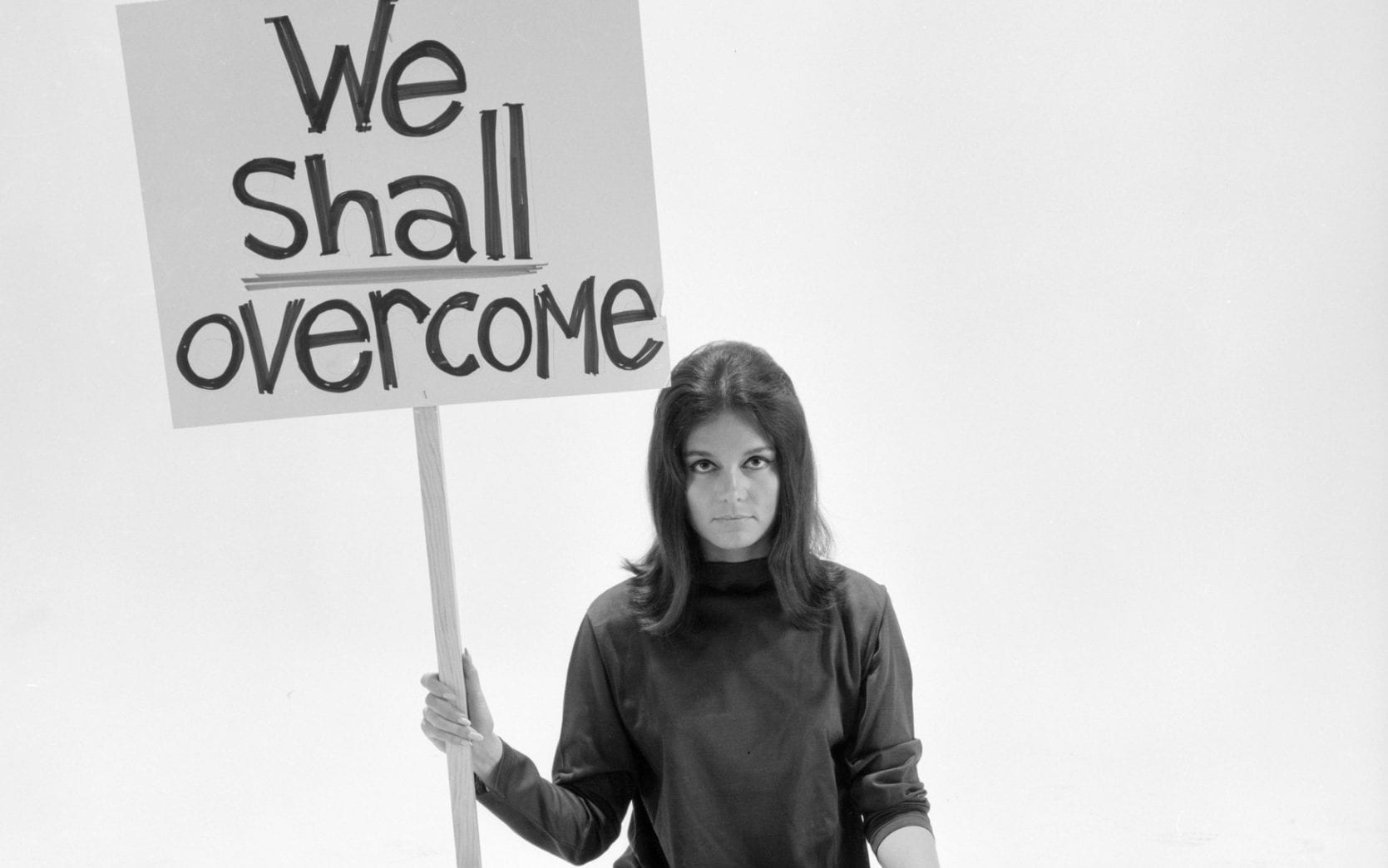
Gloria Steinem in 1965: witty and trenchant, she contradicted the stereotypical image of the dour feminist - Yale Joel/The LIFE Picture Collection/Shutterstock
Gloria Steinem, the writer who has died aged 92, was America’s best-known feminist until the age of 66, when she signed up for marriage, an institution she had been famous for attacking.
A leggy blonde with movie-star good looks (Newsweek once described her as a “lifesize counter-culture Barbie Doll”), she emerged late on to the feminist scene, and her immediate promotion to its leadership was not appreciated by longer-serving members of the movement. But with her looks and her journalism, which was witty as well as trenchant, she contradicted the stereotypical image of the dour, boiler-suited man-hater and brought feminism to the mass market.
She came to public notice when she dressed up as a Playboy Bunny and wrote about the experience. Then, with Betty Friedan, she set up the National Women’s Political Caucus in 1971 and led campaigns for abortion rights, equal pay, equal representation, and an end to domestic violence. In 1972 she launched Ms magazine, which made feminism chic and added a new word to the English lexicon.
She had a talent for the pithy aphorism, though her most famous quotation, “A woman needs a man like a fish needs a bicycle,” was in fact misattributed to her (the phrase was originally Irina Dunn’s). She did, however, coin the term “reproductive freedom” as a battle cry for feminist demands for contraception and abortion rights. In a series of brilliant satires she challenged conventional views on women’s place in society.

Gloria Steinem in 1967: Newsweek once described her as a ‘lifesize counter-culture Barbie Doll’ - Bettmann
In “If Men Could Menstruate”, she suggested, “they would brag about how long and how much. Corporate consultants would charge double for greater intuitive powers in those sensitive days at the onset of their cycles.”
In “What If Freud Were Phyllis?” she charted the career of a certain Phyllis Freud, the mother of psychoanalysis, who is born into a world in which women are considered superior because of their ability to give birth. Phyllis makes insights into universal problems such as womb envy, clitoris envy, penis anxiety and breast-castration anxiety.
One of Gloria Steinem’s selling points was that no one could accuse her of turning to feminism because she could not get a man. The cast list of her lovers, including the film director Mike Nichols, the publishing and property tycoon Mort Zuckerman, the Kennedy speechwriter Ted Sorensen, the economist JK Galbraith, even the macho writer Norman Mailer (who instructively failed to perform), only added to her fame.
Such, indeed, was the obsessive public interest in her sex life (she had, Americans were informed, experienced her first orgasm at a New York masturbation workshop), that in 1969 she felt obliged to issue a statement which read: “I am not now, and never have been, a girlfriend of Henry Kissinger.” She behaved badly but got away with it because she did so with panache.

Linda Lovelace, Gloria Steinem, Lindalee Tracy, and Bonnie Sherr Klein attend the premiere of ‘Not A Love Story: A Film About Pornography’ in New York (1982) - Sonia Moskowitz
She was an outspoken advocate of the notion that children are best off conceived out of wedlock and, at the height of her fame in the 1970s, persuaded hundreds of thousands of women to reject a social convention that she mocked as a “little death” or “an arrangement for one and a half people”.
In 1985, when her sister in arms, Betty Friedan, broke ranks and argued that the women’s movement had underestimated the importance of the family, Gloria Steinem denounced her, bringing an end to a beautiful friendship.
Thus, in 2000, when she married David Bale, a South African businessman, there was outrage. The fact that the marriage was a Cherokee ceremony conducted by someone called Wilma Mankiller, the bride wore jeans and the couple referred to each other as “the friend I married”, did nothing to convince many of her sisters that she was anything but a traitor to their cause.
Gloria Steinem was born in Toledo, Ohio, a midwestern industrial town, on March 25 1934. Her father, Leo, was a travelling antiques dealer; her mother, Ruth, had been a successful newspaper reporter who wrote under a male pseudonym, but gave it up to raise her two daughters.
When Gloria was five, her mother had the first of a series of nervous breakdowns. When she was 10, her parents divorced and her adored father left. While her older sister went away to college, Gloria was left to care for her mother. They lived in a rat-infested basement.
Ruth was diagnosed as suffering from anxiety neurosis and doped up on chloral hydrate. Gloria fed her sandwiches, fought the rats and pretended things were just fine. In later life she often said that her own reluctance to have children came from having already mothered her mother.
Advertisement

Gloria Steinem with opera conductor Sarah Caldwell in 1975 - Jack Mitchell
Somehow, she managed to continue her studies and won a place at Smith College (where she was briefly engaged). Afterwards, she spent two years in India working with Gandhi’s followers. She returned to America and became a freelance journalist in New York. By her mid-twenties, she was a columnist on The New Yorker and a writer for Esquire.
She came to fame in 1963 when she wrote an undercover exposé of life as a Playboy Bunny. She was 28, and did not then consider herself a feminist; even so, there was surprise when her claim that “Being a Playboy Bunny is rather like being hung on a meat hook” brought a deluge of letters from girls wondering where they could sign up.
From then on her journalism became more radical. She became involved in the civil rights and anti-war movements, though it was not until 1969 that she came out as a fighter in the feminist cause. The catalyst was a “speak-out” in Greenwich Village where dozens of women stood up and announced that they had had abortions. Although she did not join them, the “great blinding lightbulb of her life” came on.
The meeting made her aware of the context of her own struggles as an independent woman, and she subsequently spoke about an abortion she had had secretly in London in the 1950s. Her admission brought her saturation coverage in the press and she moved effortlessly into the role of feminist icon – and hate figure.
Rush Limbaugh, the Right-wing radio talk-show host, referred to her as a “Feminazi”, and she was the target for attacks by Christian and anti-abortion groups who tended to portray her as a fascist or Marxist sociopath bent on the moral destruction of American society. But such barbs never seemed to worry her: “An actress friend of mine said she’d been married to one fascist and one Marxist and neither of them took the garbage out,” she joked.
As editor of Ms from 1972 to 1987, and as the author of such works as Outrageous Acts and Everyday Rebellions, Gloria Steinem used shock tactics and satire to change men’s attitudes towards women and women’s attitudes to themselves. The debut issue of Ms contained a full-page petition for the legalisation and regulation of abortion; “Down with panties!” bellowed Germaine Greer in a subsequent issue.
If Gloria Steinem occasionally reached the realms of parody (“The architecture of Catholic churches mimics the female body,” she wrote. “The outer portals serve as the labia majora, the inner portals as labia minora, the side altars as ovaries, and the high altar the uterus at the heart of the swelling dome that holds the body of the faithful”), she was always readable and thought-provoking.

Attending the Citymeals-on-Wheels Power Lunch for Women with Bill Clinton in 1992 - Sonia Moskowitz
One of her more attractive characteristics was her withering contempt for the therapy industry. “The examined life,” she wrote, “is not worth living.” But her attitudes to this and to other things began to change in the late 1980s: after the end of her affair with America’s richest bachelor, Mort Zuckerman, and a diagnosis of breast cancer, she began to wonder about the meaning of life and consulted a therapist.
A different woman emerged in Revolution from Within (1992), a cliché-ridden and mawkishly intimate book about her search for “self-esteem”, full of Einstein, the Upanishads and re-parenting the inner child. Her subsequent revelation that she had tried desperately to conceive in late middle age in order to please Zuckerman demonstrated beyond doubt that she was not so different from her weaker sisters after all.
She met David Bale in 1999 at a pro-abortion Voters for Choice rally in Los Angeles. When they married, the reaction of many feminists was withering: “Gloria Steinem’s marriage is proof positive of the emotional desperation of the ageing feminists who for more than 30 years worshipped the steely career woman and callously trashed stay-at-home moms,” thundered Camille Paglia.

With the Duchess of Sussex in 2023 - Kevin Mazur
Gloria Steinem’s interpretation of her marriage was more homely and prosaic: “There’s a certain comfort in knowing that there’s a person who is going to be able to make medical decisions if you are incapacitated,” she observed. But her life as a married woman was all too short. David Bale, whose four children she became stepmother to, died in 2003.
Her activism continued, and 2015 on International Women’s Day for Disarmament she was one of 30 women who linked arms with 10,000 Korean women on both sides of the demilitarised zone between North and South. That year she wrote an apologetic article for The Advocate backtracking on a 1977 piece she had written about the male-to-female tennis player Renée Richards, criticising transsexuals who “surgically mutilate their own bodies” in order to conform to gender stereotypes”.
In 2013 she was awarded the Presidential Medal of Freedom by Barack Obama. Earlier this year she was asked by the New York Times if she had any advice for President Trump at turning 80. “Resign,” she said.
Gloria Steinem, born March 25 1934, died September 2 2026
Source: “AOL Entertainment”
